-
-

Email
info@ifainvest.com -

Address
Bundesallee 210, 10719 Berlin, Germany
-

Phone
+49 15216046679
-
-
-

Spanish
-

Franch
-

05
Jun
The Future of Banking in 2026 IFAINVEST, Money Banking , Loaning and Investment
The future of banking will be defined by innovation, security, and accessibility. AI-powered tools, digital banking platforms, and advanced financial technologies will continue transforming how people interact with money.For customers and businesses alike, staying informed about these developments is essential for making smarter financial decisions and taking advantage of emerging opportunities in the global financial sector.

05
Jun
The Future of Banking in 2026: How AI and Digital Banking Are Transforming Financial Services
The Future of Banking in 2026: How AI and Digital Banking Are Transforming Financial ServicesPublished by IFAInvestThe banking industry is experiencing one of the most significant transformations in its history. As we move further into 2026, artificial intelligence (AI), digital banking platforms, and advanced financial technologies are reshaping the way individuals and businesses manage their money.Today’s customers expect more than traditional banking services. They want speed, security, convenience, and personalized financial solutions that can be accessed anytime, anywhere. Financial institutions around the world are responding by investing heavily in digital infrastructure and innovative technologies.The Rise of AI-Powered BankingArtificial intelligence has become a key driver of innovation within the banking sector. Banks are increasingly using AI-powered systems to improve customer service, enhance security, and streamline operations.AI-powered chat assistants can now provide instant support, answer customer questions, and help users manage their accounts efficiently. Machine learning systems can also detect unusual transactions, helping prevent fraud before it impacts customers.For businesses, AI is improving credit assessments, loan processing, and financial forecasting, allowing faster decisions and better risk management.Digital Banking Is Becoming the New StandardThe demand for online banking services continues to grow rapidly. Customers no longer want to visit physical branches for routine transactions. Instead, they prefer managing their finances through secure digital platforms.Modern digital banking allows users to:Transfer funds instantlyPay bills onlineMonitor transactions in real timeApply for loans remotelyAccess investment opportunitiesManage business accounts efficientlyAs technology evolves, digital banking platforms are becoming more user-friendly and accessible than ever before.Security Remains a Top PriorityWhile digital banking offers convenience, security remains one of the industry's highest priorities.Financial institutions are implementing advanced cybersecurity measures such as:Multi-factor authenticationBiometric verificationAI-driven fraud monitoringEnd-to-end encryptionReal-time transaction alertsThese technologies help protect customers against cyber threats while maintaining a secure banking environment.The Growing Importance of Financial InclusionDigital banking is also helping expand access to financial services globally. Millions of people who previously lacked access to traditional banking can now open accounts, transfer funds, and participate in the global economy through online banking platforms.This increased accessibility is creating new opportunities for entrepreneurs, small businesses, and individuals seeking greater financial independence.What This Means for InvestorsAs banking technology continues to evolve, investors are paying close attention to fintech innovations and digital financial services. The growing adoption of AI, cloud computing, and digital payment systems is creating new opportunities across global financial markets.Businesses that embrace digital transformation are often better positioned to serve customers efficiently and remain competitive in an increasingly technology-driven economy.How IFAInvest Supports Modern BankingAt IFAInvest, we recognize the importance of innovation in today's financial landscape. Our platform is designed to provide secure, efficient, and accessible banking solutions that help individuals and businesses manage their finances with confidence.Whether you are looking to send and receive funds, apply for financing, or explore investment opportunities, IFAInvest remains committed to delivering reliable financial services supported by modern technology.Looking AheadThe future of banking will be defined by innovation, security, and accessibility. AI-powered tools, digital banking platforms, and advanced financial technologies will continue transforming how people interact with money.For customers and businesses alike, staying informed about these developments is essential for making smarter financial decisions and taking advantage of emerging opportunities in the global financial sector.IFAInvest – Banking, Investing, and Financial Growth for the Digital Age.

01
Jun
Global Agro Wholesale IFAInvest — Financing Growth, Empowering Global Trade
https://globalagrowholesale.com/ For business financing, investment opportunities, and international banking services, contact IFAInvest and discover how we can help your business grow beyond borders. IFAInvest — Financing Growth, Empowering Global Trade.

01
Jun
Financing Global Agro Supply from the Philippines
How IFAInvest Helped Support One of the Largest Agro Food Supply Networks Worldwide In today's fast-moving agricultural marketplace, access to reliable financing can be the difference between growth and missed opportunity. At IFAInvest, we take pride in empowering businesses that feed communities, support economies, and connect global markets. One of our recent success stories comes from the Philippines, where IFAInvest provided strategic financial support to help facilitate large-scale agricultural sourcing, procurement, and international distribution through Global Agro Wholesale. Strengthening Global Food Supply Chains The agricultural sector requires substantial working capital to manage procurement, logistics, storage, packaging, and international shipping. As demand for high-quality grains, spices, pulses, sweeteners, herbs, and food ingredients continued to increase across international markets, Global Agro Wholesale sought a financial partner capable of supporting its expanding operations. Through customized financing solutions, IFAInvest helped provide the necessary capital to strengthen procurement activities and improve supply chain efficiency. This support enabled larger purchasing volumes from trusted growers and suppliers throughout the Philippines and other strategic sourcing regions. Expanding International Reach With enhanced financial backing, Global Agro Wholesale successfully expanded its export capabilities and strengthened relationships with international buyers across multiple continents. The company now supplies a diverse range of agricultural commodities, including: Rice and Basmati Rice Wheat and Maize Chickpeas and Pulses Soybeans and Soybean Meal Peanuts and Blanched Peanuts Sesame Seeds and Sunflower Seeds Turmeric, Coriander, Cumin, Cardamom, Cloves, and White Pepper Bay Leaves and Other Herbs Dehydrated Garlic and Dehydrated Onion Jaggery and Natural Sweeteners Amla Powder and Herbal Ingredients By ensuring access to dependable trade financing, IFAInvest helped create opportunities for smoother international transactions and sustainable business growth. Supporting Farmers and Agricultural Communities Beyond business expansion, this partnership has contributed to stronger agricultural ecosystems by increasing demand for quality agricultural products and creating additional opportunities for producers and suppliers throughout the supply chain. Reliable financing allows businesses to purchase crops on time, maintain inventory levels, and fulfill international contracts efficiently. This creates a positive impact that extends from farmers and processors to distributors and end customers around the world. A Shared Vision for Growth At IFAInvest, our mission goes beyond traditional banking. We strive to become a strategic partner for businesses seeking growth, stability, and international expansion. The success achieved through our collaboration with Global Agro Wholesale demonstrates how access to the right financial solutions can help businesses overcome operational challenges and unlock new opportunities in global trade. Looking Ahead As worldwide demand for agricultural commodities continues to rise, IFAInvest remains committed to supporting importers, exporters, wholesalers, manufacturers, and agribusinesses with flexible financial solutions tailored to their needs. Whether it's trade finance, business banking, investment opportunities, or commercial lending, IFAInvest is dedicated to helping businesses build stronger futures and expand their global footprint. Learn More To explore premium agricultural commodities and global wholesale supply solutions, visit: 🌐 Global Agro Wholesale https://globalagrowholesale.com/ For business financing, investment opportunities, and international banking services, contact IFAInvest and discover how we can help your business grow beyond borders. IFAInvest — Financing Growth, Empowering Global Trade.

26
May
Water Security: A Global Priority for Economic Growth and Stability
The global demand for clean and reliable water continues to rise as climate change, population growth, and aging infrastructure place enormous pressure on water systems worldwide. In response to this growing challenge, the World Bank Group has launched a major new initiative called Water Forward, designed to improve water security for more than one billion people by 2030.According to the official announcement published on World Bank News, the initiative will bring together governments, development finance institutions, private investors, and international partners to strengthen access to reliable water services while helping communities prepare for droughts, floods, and climate-related disruptions.Why Water Security MattersWater is far more than a basic human necessity. It is directly connected to:Food production and agricultureEnergy generationPublic health and sanitationManufacturing and industrial growthEmployment and economic productivityThe World Bank estimates that water systems support approximately 1.7 billion jobs globally, yet nearly 4 billion people experience water scarcity during part of the year.Without reliable access to water, economies struggle to grow, businesses face operational risks, and communities become more vulnerable to poverty and migration pressures.The “Water Forward” InitiativeThe new Water Forward platform seeks to address these challenges by aligning:Policy reformsPublic and private financingInfrastructure investmentsClimate resilience strategiesInternational partnershipsThe initiative aims to help countries modernize water infrastructure, improve sanitation systems, strengthen institutions, and create investment-ready projects capable of attracting long-term funding.7Economic Opportunities Through Water InvestmentAt IFAINVEST, we recognize that infrastructure development and sustainable financing are closely tied to long-term economic stability. Water security initiatives create opportunities for:Infrastructure financingRenewable energy integrationAgricultural productivityUrban developmentClimate adaptation investmentsAs governments and financial institutions increase spending on water resilience, new opportunities are emerging for investors, contractors, engineering firms, and technology providers involved in sustainable development projects.Climate Change and the Future of WaterClimate-related disasters continue to increase pressure on global water systems. Flooding, droughts, and extreme weather events are affecting agriculture, energy production, and supply chains across multiple regions.The Water Forward initiative places strong emphasis on building resilient systems that can withstand environmental shocks while supporting economic growth and job creation.Countries participating in the initiative are expected to develop national water compacts focused on reform priorities, institutional strengthening, and investment planning.A Global Financial Shift Toward SustainabilityThe launch of Water Forward reflects a broader global trend toward sustainable infrastructure investment. International financial institutions are increasingly prioritizing projects that combine:Economic growthEnvironmental protectionPublic health improvementClimate resilienceLong-term financial sustainabilityThis shift opens new pathways for innovative banking solutions, international partnerships, and investment strategies focused on sustainable development.ConclusionThe World Bank Group’s Water Forward initiative marks an important step toward addressing one of the world’s most urgent challenges. Improving water security for one billion people is not only a humanitarian effort — it is also an economic strategy designed to support jobs, productivity, and long-term global stability.For financial institutions, investors, and development partners, the future of infrastructure financing will increasingly revolve around sustainability, resilience, and essential resource management.As global priorities evolve, organizations that adapt early to sustainable investment trends will be better positioned to participate in the next generation of international development opportunities.

21
May
A Word from the Bank Manager of IFAINVEST Empowering Businesses Through Sustainable and Affordable Financing
In today’s fast-changing economic environment, access to reliable and affordable financing is one of the most important tools for business growth and financial stability. At IFAINVEST, we understand the challenges entrepreneurs, property investors, and farmers face when trying to expand their operations, improve productivity, or pursue new opportunities. As Bank Manager of IFAINVEST, I want to personally encourage individuals, startups, and established businesses to take advantage of our sustainable loan solutions designed to support long-term success and economic growth. At IFAINVEST, we believe financing should not be a burden — it should be a bridge to opportunity. That is why we offer flexible repayment options, competitive interest rates, transparent terms, and fast approval processes to help our clients achieve their goals with confidence.Supporting Business Growth Through Smart FinancingEvery successful business starts with a vision, but growth often requires financial support. Whether you are expanding your operations, purchasing equipment, hiring staff, or increasing inventory, our Business Financing solutions are tailored to help entrepreneurs scale sustainably.We are committed to helping small and medium-sized enterprises thrive by providing affordable loan assistance that reduces financial pressure while enabling innovation and expansion. Many business owners struggle to access traditional financing, which is why IFAINVEST focuses on creating flexible and customer-friendly lending solutions. (ifainvest.com)Property Financing for a Secure FutureReal estate and property development continue to be among the most reliable paths toward wealth creation and long-term investment security. Through our Property Financing programs, we assist clients in acquiring, developing, and improving residential and commercial properties.Whether you are investing in rental properties, purchasing commercial space, or building your dream development project, IFAINVEST provides financing options designed to make property ownership more achievable and affordable.Our goal is to help individuals and businesses build sustainable assets that contribute to lasting financial stability.Agricultural Financing — Investing in the Backbone of the EconomyAgriculture remains one of the world’s most essential industries. Farmers and agribusiness owners play a critical role in food production, employment, and economic development. However, agricultural growth often requires access to timely capital for equipment, irrigation systems, seeds, fertilizers, livestock, and expansion projects.At IFAINVEST, we proudly support farmers through Agricultural Financing solutions created specifically for the unique needs of the agricultural sector. Industry experts continue to emphasize that agricultural loans help improve productivity, encourage modernization, and strengthen long-term farming sustainability. (Crestmont Capital)Our financing programs are designed to empower farmers and agribusiness owners with the resources they need to grow successfully while benefiting from manageable repayment structures.More Than Loans — A Trusted Financial PartnershipBeyond Business Financing, Property Financing, and Agricultural Financing, IFAINVEST also offers a wide range of loan assistance programs tailored to meet diverse personal and commercial needs.What makes IFAINVEST different is our commitment to transparency, trust, and customer support. According to information published on our platform, we provide:Flexible repayment plansLow-interest and affordable loan ratesQuick approval processesTransparent loan agreements with no hidden feesDedicated loan assistance and customer support (ifainvest.com)We are not simply offering loans — we are building long-term relationships with individuals and businesses who want to create a stronger financial future.A Message to Entrepreneurs, Investors, and FarmersNow is the time to invest in your future. Sustainable financing can transform ideas into successful businesses, expand agricultural production, and create opportunities for families and communities.At IFAINVEST, we are proud to stand beside entrepreneurs, property investors, and farmers as trusted financial partners. We invite you to explore our affordable loan solutions and discover how our financing programs can help you achieve your goals with confidence and peace of mind.Together, we can build stronger businesses, stronger communities, and a more sustainable future.To learn more or begin your application, visit:IFAINVEST Official Website
10
May
How IFAINVEST Supports Flexible Oil Purchasing During Strait of Hormuz Disruptions
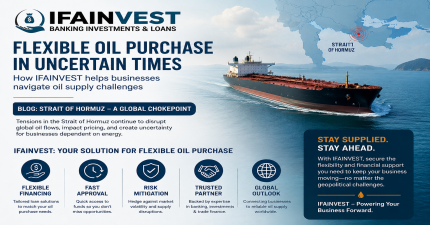
The Strait of Hormuz remains one of the world’s most critical oil transit routes, carrying a significant portion of global crude oil exports every day. Whenever tensions, delays, or geopolitical instability affect this strategic passage, businesses worldwide immediately feel the impact through rising oil prices, supply uncertainty, shipping delays, and increased financial pressure. For companies that depend on stable energy supplies, the ability to secure oil purchases quickly and flexibly becomes essential. This is where IFAINVEST provides strategic financial solutions designed to help businesses maintain operations and protect growth during uncertain market conditions. The Impact of Strait of Hormuz Disruptions on Global Oil Markets Disruptions in the Strait of Hormuz can create immediate effects across international markets, including: Sudden increases in crude oil prices Delays in oil transportation and shipping schedules Supply shortages for manufacturers and distributors Increased pressure on business cash flow Currency market volatility and inflation risks As global demand continues despite logistical challenges, businesses must secure reliable financing and faster access to capital in order to continue purchasing oil and maintaining supply chains. Why Flexible Oil Procurement Matters Traditional financing systems often move too slowly during periods of market instability. Businesses may face delays in approvals, strict funding conditions, or limited liquidity exactly when rapid action is required. Flexible oil procurement financing helps companies: Respond quickly to changing market prices Secure supply contracts before shortages worsen Maintain operational continuity Reduce exposure to sudden market disruptions Preserve working capital for other business activities How IFAINVEST Helps Businesses Stay Ahead IFAINVEST offers customized financial support solutions that help businesses continue oil procurement activities even during volatile global conditions. Flexible Financing Solutions IFAINVEST provides structured financing options tailored to the size and urgency of oil procurement needs. This allows businesses to secure fuel and energy resources without placing excessive strain on operational cash flow. Faster Access to Capital In volatile markets, timing is critical. Quick financial approvals help businesses act fast on purchasing opportunities and avoid disruptions caused by delayed funding. Risk Mitigation Strategies Oil markets can shift rapidly due to geopolitical events. IFAINVEST supports clients with financing structures designed to help reduce exposure to price fluctuations, delayed shipments, and supply uncertainty. Global Reach and Supply Support Through international financial support solutions, IFAINVEST helps businesses connect with reliable suppliers and maintain continuity across global energy supply chains. Navigating Uncertainty with Confidence Periods of geopolitical instability often create challenges, but they also create opportunities for prepared businesses to remain competitive. Companies that can secure flexible financing and maintain reliable procurement capabilities are better positioned to continue operating successfully while others face delays or shortages. With global energy markets continuing to evolve, strategic financial partnerships are becoming increasingly important for long-term business resilience. Conclusion The challenges surrounding the Strait of Hormuz highlight the importance of flexible and responsive financial solutions in today’s global economy. Businesses that depend on stable oil supplies need financing partners capable of moving quickly, managing risk, and supporting procurement during uncertain times. IFAINVEST continues to provide businesses with the financial flexibility needed to secure oil purchases, manage market uncertainty, and maintain operational momentum in a rapidly changing global environment.

10
May
How the Blockage of the Strait of Hormuz Affects the Dollar Exchange Market
The Strait of Hormuz is one of the most important waterways in the global economy. Located between the Persian Gulf and the Gulf of Oman, it serves as a major route for the transportation of oil and natural gas from the Middle East to international markets. Any disruption or blockage in this strategic passage can have significant effects on global financial markets, especially on the value of the United States dollar and foreign exchange markets.Why the Strait of Hormuz MattersNearly a fifth of the world’s oil supply passes through the Strait of Hormuz every day. Countries such as Saudi Arabia, the United Arab Emirates, Kuwait, Iraq, and Iran depend heavily on this route to export energy products to Europe, Asia, and other parts of the world.When tensions rise in the region or when threats of blockage occur, investors and governments become concerned about possible interruptions in global oil supplies.Impact on Oil PricesOne of the first consequences of a blockage is usually a sharp increase in oil prices. Since global economies rely heavily on oil for transportation, manufacturing, and electricity production, reduced supply quickly creates panic in energy markets.Higher oil prices increase inflation worldwide because businesses face higher transportation and production costs. Consumers also pay more for fuel and goods.Effects on the US DollarThe United States dollar is considered the world’s primary reserve currency and is widely used in global oil trading. During times of geopolitical uncertainty, many investors move their money into safer assets such as the US dollar and US Treasury bonds.As a result:Demand for the US dollar often risesThe dollar may strengthen against weaker currenciesEmerging market currencies may lose valueGlobal currency markets become more volatileHowever, if oil prices remain high for a long period, the US economy can also face inflationary pressure, which may weaken consumer spending and economic growth. In such cases, the Federal Reserve may adjust interest rates to control inflation, further influencing currency exchange markets.Impact on International TradeCountries that import large amounts of oil, especially in Europe and Asia, often suffer the most from disruptions in the Strait of Hormuz. Their currencies can weaken because they need more US dollars to purchase expensive oil supplies.This creates stronger global demand for dollars and can increase pressure on developing economies with limited foreign currency reserves.Investor ReactionsFinancial markets generally react quickly to geopolitical risks. Investors may:Move funds into safe-haven currencies like the US dollar and Swiss francSell stocks in high-risk marketsIncrease investments in gold and energy sectorsReduce exposure to emerging marketsThese reactions can create major fluctuations in exchange rates around the world.ConclusionThe Strait of Hormuz plays a critical role in maintaining global economic stability. Any blockage or disruption can lead to rising oil prices, inflation, market uncertainty, and increased volatility in currency exchange markets.Because oil transactions are heavily tied to the US dollar, geopolitical tensions in the region often strengthen the dollar in the short term while creating broader economic challenges globally. Governments, investors, and financial institutions closely monitor developments in the Strait of Hormuz because of its powerful influence on global trade and financial systems.

03
Aug
Helped by Loan : Finding the Perfect Summer Internship For You
After graduating from college, many jobs want experience in your work field. Having a summer internship is a great way gain experience. Here are some ways to find the perfect internship for you:Check out online resourcesThere are many online resources to help you look for internships. CyHire is a great tool to find employers who are recruiting Iowa State students. You can search for positions by your college or major, upload your resume, view career fair information and more. You can even automate your CyHire search to have new opportunities emailed to you. LinkedIn is another great tool to connect with people and to find internships in different cities and states. Through LinkedIn you can also connect with alumni of Iowa State University.Attend career fairsCareer fairs are a great way to network and to create connections with people in the work force. Through networking you are able to share your resume and network for yourself with others. Connections are important for finding job opportunities.Contact the employer directlyYou don’t see an internship at a business or organization you want to work for? Contact the business or the employers. This shows them that you are motivated and willing to go the extra mile.Find something that works for youLooking for an internship that intrigues you and will help you improve your skills and connections is important when making a final decision. While there are both paid and un-paid internships, there may be scholarships you can apply for if you decide to take an un-paid position, so don’t discount an opportunity if it will ultimately help you gain valuable experience.
03
Aug
Agri-loan, key to farming success
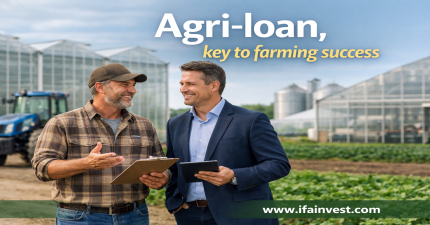
Starting today's article with statistics provided by the Bangladesh Bank.According to IFPRI, 19 percent of farmers take loans from relatives. 15 percent from the landowner, 11.4 percent come from moneylenders and 3.6 percent from various associations and cooperatives. Farmers get the largest share of the loan from the Krishi Bank, which is aboFarming has never been easy. Between unpredictable weather, fluctuating commodity prices, rising input costs, and the need for constant innovation, turning a profit while feeding the world is a monumental task. Yet, one financial tool stands out as a true game-changer for farmers of all scales: the agri-loan (agricultural loan). When used strategically, agri-loans provide the capital to invest, expand, and weather challenges—often making the difference between mere survival and real success. In this post, we'll explore why agri-loans are essential, their main benefits, potential pitfalls, and practical steps to secure and manage one effectively. Why Agri-Loans Matter in Modern Farming Agriculture is capital-intensive. Seeds, fertilizers, machinery, land, labor, and irrigation systems all demand significant upfront investment long before any revenue arrives. For smallholder and beginning farmers especially, cash flow gaps during planting and growing seasons can halt progress. Agri-loans bridge these gaps. Tailored to farming's seasonal and cyclical nature, they offer flexible terms that align with harvest cycles—unlike standard business loans. Institutions like the USDA's Farm Service Agency (FSA), Farm Credit System, commercial banks, and specialized ag lenders recognize this reality, providing products designed for the unique risks and rewards of agriculture. Access to credit isn't just helpful—it's often the foundation for growth, resilience, and long-term viability. Key Benefits of Agri-Loans Here are the primary ways agri-loans drive farming success: Access to Modern Equipment and Technology Upgrading to precision agriculture tools, efficient tractors, harvesters, irrigation systems, or drones boosts yields, cuts labor costs, and reduces waste. Loans make these investments possible without draining savings. (Imagine modern tractors working vast fields—precision tech in action.) Purchasing or Expanding Land Farm ownership loans help buy additional acreage, refinance existing property, or improve buildings and soil/water conservation—essential for scaling operations and increasing production capacity. Covering Operating Expenses Crop operating loans fund seeds, fertilizers, fuel, labor, and other seasonal needs. This smooths cash flow, allowing farmers to focus on production rather than scrambling for funds mid-season. Diversification and Risk Management Loans enable trying new crops, adding livestock, or adopting climate-smart practices—building resilience against market volatility or weather events. Support for Beginning and Smallholder Farmers Programs like USDA beginning farmer loans or microloans ease entry with relaxed requirements, lower paperwork, and targeted funding—helping new generations succeed. Competitive Advantages Lower interest rates (compared to general loans), flexible repayment tied to harvest timing, and specialized lenders who understand agriculture make agri-loans more farmer-friendly. These advantages help increase productivity, profitability, and sustainability—turning ambitious plans into reality. Potential Challenges and How to Handle Them Agri-loans aren't risk-free. Key drawbacks include: Debt burden if yields or prices fall short Collateral requirements (often land or equipment) Interest costs adding pressure during low-price years Strict qualification (good credit, solid business plan needed) Mitigate these by: Borrowing only what you need and can repay Maintaining detailed records and realistic budgets Exploring crop insurance or government guarantees Choosing flexible lenders familiar with agriculture How to Secure an Agri-Loan: Practical Steps Assess Your Needs — Calculate exact requirements (e.g., equipment vs. operating costs). Build a Strong Business Plan — Include production projections, marketing strategy, cash flow forecasts, and risk management. Lenders love data-driven plans. Check Your Credit and Finances — Review credit score, prepare balance sheets, income statements, and tax returns. Research Lenders — Compare USDA FSA (great for beginners), Farm Credit institutions, local ag banks, or online options. Look for flexible terms and ag expertise. Apply with Documentation — Expect to provide financials, farm details, collateral info, and sometimes appraisals. Explore Government Programs — In many countries (e.g., USDA in the US), targeted support exists for young, small, or underserved farmers. Pro tip: Start early—loan processes take time, especially before planting season. Final Thoughts: Unlocking Your Farm's Potential An agri-loan isn't just debt—it's strategic capital that fuels growth, innovation, and stability. In an industry where timing and investment determine outcomes, the right financing can transform challenges into opportunities. Whether you're a smallholder aiming to boost yields, a mid-size operator expanding acreage, or a beginner taking your first steps, agri-loans remain a powerful key to long-term farming success. Have you used an agri-loan to grow your operation? Share your experience in the comments—what worked, what you'd do differently? Happy farming—and smart financing! 🌾ut 15 percent. Large, medium and small farmers together get 36 percent of the total loan while marginal farmers get about 5 percent. The total percentage of loan all the farmers get is 36 percent. Sharecroppers, the farmers who cultivate other people's land on lease, do not get this loan. As a result, they have to rely on loans from other sources, including NGOs.Small NGOs and associations began to form in the districts and upazilas from the 80s to the early 90s of the last century. Along with other developmental activities, these institutions started a micro-credit programme. Institutions thrive mainly on interest earned from loans. But there is no such change in the farmer I have witnessed. The farmer falls into a debt trap and sometimes carry the burden of prolonged loans that they take from NGOs and local moneylenders. Farmer Rafiqul Islam from Natore, at one of the open-air discussion among farmers and policymakers, popularly known as 'Krishi Budget Krishoker Budget' (Farmers' Voices in Budget, aired on Channel i), said he has never seen any political person become poor while doing politics, but the farmers are not well off doing their profession, which is farming. "We don't have capital, no one thinks about our market, no one talks about us," Rafiqul angrily said. Such anger doesn't only come from Rafiqul, but almost every farmer bears the same agony. Most importantly, the moneylenders expanded their business by capitalizing on the poor state of the farmers and they never want them to get out of this vicious circle of borrowing money from the locally-rich and powerful people.Agri-Loan: The Key to Farming SuccessAgriculture remains the backbone of many economies, especially across Africa, where it provides livelihoods, ensures food security, and drives rural development. Yet, one of the biggest challenges farmers face is access to adequate financing. This is where agri-loans come in—a powerful tool that can transform small-scale farming into profitable, sustainable agribusiness.What is an Agri-Loan?An agri-loan is a type of financing specifically designed to support agricultural activities. It provides farmers with the capital they need to invest in seeds, fertilizers, equipment, irrigation systems, livestock, and other essential resources required for successful farming.Unlike traditional loans, agri-loans are often structured with flexible repayment terms that align with farming cycles, making them more suitable for agricultural operations.Why Agri-Loans Matter1. Boosting ProductivityWith access to funds, farmers can purchase high-quality seeds, modern equipment, and fertilizers. This leads to increased crop yields and improved quality of produce.2. Encouraging Modern Farming TechniquesAgri-loans enable farmers to adopt advanced technologies such as irrigation systems, mechanized tools, and greenhouse farming. These innovations reduce labor, save time, and increase efficiency.3. Expanding Farm OperationsFarmers can use loans to acquire more land, diversify crops, or invest in livestock farming. Expansion often leads to higher income and better resilience against market fluctuations.4. Reducing Financial StressInstead of relying on informal lenders with high interest rates, farmers can access structured financing with manageable repayment plans. This creates financial stability and better planning.5. Supporting Agribusiness GrowthAgri-loans are not limited to crop farming—they also support processing, storage, transportation, and distribution. This strengthens the entire agricultural value chain.Types of Agri-LoansShort-term loans: For seasonal inputs like seeds and fertilizersMedium-term loans: For equipment and livestockLong-term loans: For land purchase, irrigation systems, and infrastructureMicroloans: For smallholder farmers with limited capital needsKey Benefits of Agri-LoansImproved cash flow managementIncreased farm output and incomeAccess to better marketsEnhanced food securityJob creation in rural communitiesHow to Qualify for an Agri-LoanWhile requirements vary by lender, farmers typically need:A clear farming or business planProof of land ownership or usage rightsFinancial records or income estimatesIdentification and basic documentationSome lenders may also require collateral, while others offer group lending or government-backed programs to reduce risk.Tips for Using an Agri-Loan SuccessfullyPlan before borrowing – Know exactly how the funds will be usedBorrow what you need – Avoid over-borrowing to reduce repayment pressureInvest wisely – Focus on inputs or assets that generate returnsTrack your expenses – Keep records to manage your finances effectivelyRepay on time – Maintain a good credit history for future opportunitiesThe Future of Farming with Agri-LoansAs agriculture evolves, access to finance will play an even greater role in shaping the industry. With the rise of digital banking, mobile money, and government support programs, agri-loans are becoming more accessible to farmers—even in remote areas.Farmers who embrace these financial tools position themselves for long-term success, sustainability, and growth.ConclusionAgri-loans are more than just financial support—they are a catalyst for transformation in agriculture. By enabling farmers to invest, expand, and innovate, these loans unlock the true potential of farming.Whether you are a smallholder farmer or an emerging agribusiness owner, leveraging agri-loans can be the key to achieving productivity, profitability, and lasting success in agriculture.

03
Aug
Dealing with Delinquent Business Loans: Protecting Your Finances and Credit
Closing on a business loan often brings a sense of relief and excitement as you secure the funds to grow your business. However, it’s not uncommon to find yourself overwhelmed after a few months or years, realizing that you’ve taken on more than you can handle. With over one-third of Americans struggling with delinquent debt and the risk of loan defaults, taking immediate action is crucial when you fall behind on loan payments. This article provides essential information on delinquent loans, defaults, and practical strategies to protect yourself and minimize the associated damage.Understanding Delinquent LoansA loan becomes delinquent when you miss a payment, even in just one day. If you miss payments or cannot make them for an extended period (typically 90 to 120 days), the lender may classify the loan as default and initiate collection procedures. Both delinquent loans and defaults have negative implications for your credit. It’s important to note that the timing of your delinquency rarely matters. For example, if your payment is due on February 1 and the lender doesn’t receive it that day, the loan becomes delinquent on February 2.Consequences of Delinquent LoansThe consequences of a delinquent loan depend on your lender’s policies and the terms outlined in the loan agreement. However, there are three typical outcomes:Penalty Rates & Late Fees: Loan agreements often permit lenders to charge late fees after a few days grace period. Some agreements also permit the lender to increase the interest rate on overdue amounts, known as a “penalty rate” or “default rate.” Late fee structures vary among lenders, so it’s essential to understand their specific policies to avoid surprises.Negative Impact on Credit Score: Once you are 30 days late on payments, lenders can report the late payment to credit bureaus. Beyond this period, a late payment can decrease your credit score by nearly 100 points. In addition, poor credit score makes qualifying for future business loans more challenging. Late payments can remain on your credit report for up to seven years, even if you pay the lender after the item is reported.It’s worth noting that this 30-day rule does not apply to business credit reports, as lenders can report late payments to commercial credit bureaus even if you are just one day late.Increased Contact from LendersWhen you have a delinquent loan, expect frequent calls and emails from your lender urging you to make payments. Lenders prioritize collection efforts while the deadline is fresh in your mind. As delinquency continues, it becomes more challenging for lenders to collect the debt.Delinquent Loans vs. Defaulted LoansA loan transitions from delinquency to default when you have an outstanding balance for an extended period specified in the loan agreement. Typically, lenders wait 90 to 120 days before considering a loan as default.How to Identify Defaulted LoansWhen a loan goes into default, the lender will send you a written notice stating that you have breached the loan agreement and must immediately repay the entire loan balance. The lender might also sell or transfer the debt to a collection agency, escalating collection efforts to recover the outstanding balance. If the lender believes they won’t recover the money, they can charge off the loan, removing it from their books. However, you remain responsible for paying the debt.Actions After DefaultThe lender’s subsequent actions depend on whether the loan is secured or unsecured. Secured loans have collateral or personal guarantees backing them, while unsecured loans do not.

29
Jul
Rev Up Your Journey: A Guide to Car Loans
I wouldn’t say it’s harder to get a mortgage if you’re self-employed, but it’s less straightforward than for an employed person. You’ll find that lenders will ask you for more documentation. They’re potentially going to look at your income a little bit more closely, compared with an employed person who will just have to provide payslips and maybe some bank statements.One of the outcomes of Covid last year was that it took a while for mortgage providers to start lending to more self-employed clients. There were minimum deposit restrictions in place. Some lenders still have these – they will ask for a 25% deposit if you’re self-employed.But most are going back to the norm now.Lenders vary in terms of how much they will lend self-employed people and the type of self-employed clients they will accept. That just means you need to do a bit more research before you apply to a lender.What if I only have one year’s accounts?You should still be able to get a mortgage with just one year’s accounts. The majority of lenders usually want two years’ history as self-employed, but some will accept a year’s self-employed income.There are even lenders who in some scenarios would accept the self-employed from day one. For example if someone who had one year’s accounts as an accountant decided to be a self-employed builder, they might struggle because there’s no work experience history. But an employed accountant moving to become a self-employed accountant is more likely to be accepted with a year’s accounts.Imagine a doctor that has worked for the NHS for five years is buying into a local, established practice. Many lenders would consider that from day one because the practice already has history. So it is definitely possible to get a mortgage with one year’s accounts, and sometimes less.As brokers we’re here to help. We’ve got a really good understanding of which lenders are most suitable for every type of client.Are self-cert mortgages still available?Thankfully not, but we have seen some companies try to set up self-certs abroad. I would avoid those companies like the plague.Self-cert mortgages are not a good idea – back in 2008 a major factor in the credit crunch for the mortgage world was self-cert, and so they’re not available anymore.Can you get a joint mortgage if one person is self-employed?It does help to have someone else on the mortgage who’s employed, particularly when it comes to credit scoring. It will also increase the amount you can borrow, because the lender will base the loan on your combined incomes.One thing to do before you apply for a mortgage if you’re self-employed is to have a look at your credit score and register on the electoral roll. Some lenders might score you more harshly when you’re self-employed as the risk to them is higher.With mortgages for the self-employed a broker really comes into their own – we can look at all the different options.What’s the difference in mortgages for a sole trader and a limited company director?A lot of this is to do with how the lenders treat you – firstly in terms of how they calculate your income. If you’re a sole trader or running a partnership, the lender will usually take two years worth of your tax returns. They’ve got various names: tax calculations or SA302s. The lender will usually work off your net profit, which is your income after your expenses. They will usually take either an average of your last two years’ net profits or use your latest year if there’s a steady increase.The main difference for a limited company is that even though you’re self-employed, you’re actually employed by your limited company and receive your income via salary and dividends. The majority of lenders will use your two years’ salary and dividend figures from your tax calculations.But there are also lenders that will disregard your salary and dividends and go for your net profits instead – that will often allow you to borrow a lot more. So, as a limited company the way lenders can view you will vary considerably.How much can a self-employed person borrow on a mortgage?Where affordability can vary is whether the lender uses the average of your last two years or your latest year. The average income might work out at, say, £25,000 but if your latest year is £40,000 that could be quite a big difference.But it’s with limited companies that we see the biggest difference in affordability. A limited company director may have taken a salary and dividend of say £40,000 – some lenders will take that as the income. But perhaps their net profit is £100,000 a year. Other lenders will take that as your income – which means a massive difference in how much you can borrow. NatWest or Halifax will use salary and dividends while Coventry and HSBC, for example, will use the £100,000.If you want a rough idea of how much you could borrow, the very general rule is about 4.5 times your income, up to a maximum of about 4.75 and, in some very rare instances, up to 5 times.

29
Jul
Unlock Your Dream Home: Explore Our Home Loan Options.
I wouldn’t say it’s harder to get a mortgage if you’re self-employed, but it’s less straightforward than for an employed person. You’ll find that lenders will ask you for more documentation. They’re potentially going to look at your income a little bit more closely, compared with an employed person who will just have to provide payslips and maybe some bank statements.One of the outcomes of Covid last year was that it took a while for mortgage providers to start lending to more self-employed clients. There were minimum deposit restrictions in place. Some lenders still have these – they will ask for a 25% deposit if you’re self-employed.But most are going back to the norm now.Lenders vary in terms of how much they will lend self-employed people and the type of self-employed clients they will accept. That just means you need to do a bit more research before you apply to a lender.What if I only have one year’s accounts?You should still be able to get a mortgage with just one year’s accounts. The majority of lenders usually want two years’ history as self-employed, but some will accept a year’s self-employed income.There are even lenders who in some scenarios would accept the self-employed from day one. For example if someone who had one year’s accounts as an accountant decided to be a self-employed builder, they might struggle because there’s no work experience history. But an employed accountant moving to become a self-employed accountant is more likely to be accepted with a year’s accounts.Imagine a doctor that has worked for the NHS for five years is buying into a local, established practice. Many lenders would consider that from day one because the practice already has history. So it is definitely possible to get a mortgage with one year’s accounts, and sometimes less.As brokers we’re here to help. We’ve got a really good understanding of which lenders are most suitable for every type of client.Are self-cert mortgages still available?Thankfully not, but we have seen some companies try to set up self-certs abroad. I would avoid those companies like the plague.Self-cert mortgages are not a good idea – back in 2008 a major factor in the credit crunch for the mortgage world was self-cert, and so they’re not available anymore.Can you get a joint mortgage if one person is self-employed?It does help to have someone else on the mortgage who’s employed, particularly when it comes to credit scoring. It will also increase the amount you can borrow, because the lender will base the loan on your combined incomes.One thing to do before you apply for a mortgage if you’re self-employed is to have a look at your credit score and register on the electoral roll. Some lenders might score you more harshly when you’re self-employed as the risk to them is higher.With mortgages for the self-employed a broker really comes into their own – we can look at all the different options.What’s the difference in mortgages for a sole trader and a limited company director?A lot of this is to do with how the lenders treat you – firstly in terms of how they calculate your income. If you’re a sole trader or running a partnership, the lender will usually take two years worth of your tax returns. They’ve got various names: tax calculations or SA302s. The lender will usually work off your net profit, which is your income after your expenses. They will usually take either an average of your last two years’ net profits or use your latest year if there’s a steady increase.The main difference for a limited company is that even though you’re self-employed, you’re actually employed by your limited company and receive your income via salary and dividends. The majority of lenders will use your two years’ salary and dividend figures from your tax calculations.But there are also lenders that will disregard your salary and dividends and go for your net profits instead – that will often allow you to borrow a lot more. So, as a limited company the way lenders can view you will vary considerably.How much can a self-employed person borrow on a mortgage?Where affordability can vary is whether the lender uses the average of your last two years or your latest year. The average income might work out at, say, £25,000 but if your latest year is £40,000 that could be quite a big difference.But it’s with limited companies that we see the biggest difference in affordability. A limited company director may have taken a salary and dividend of say £40,000 – some lenders will take that as the income. But perhaps their net profit is £100,000 a year. Other lenders will take that as your income – which means a massive difference in how much you can borrow. NatWest or Halifax will use salary and dividends while Coventry and HSBC, for example, will use the £100,000.If you want a rough idea of how much you could borrow, the very general rule is about 4.5 times your income, up to a maximum of about 4.75 and, in some very rare instances, up to 5 times.

27
Oct
USA mortgages: ‘How did a $42,500 loan turn into a $477,000 debt?’
Cooper’s parents died in 2021, and their house was last year valued at $750,000, so – as things stand – he and his sister will have to hand over most of that to the bank. He says he feels certain his late parents did not realise that that $42,500 loan could spiral to close to $500,000 and “cost their kids their inheritance”.However, the bank says it recommended at the time that customers took independent financial advice to ensure they understood the product and that it was right for them, and adds that in this case, solicitors were instructed by the borrowers.The Coopers are among hundreds – probably thousands – of families whose lives have been blighted by shared appreciation mortgages (Sams). This was a type of home loan that was only on sale for a brief period, between 1996 and 1998, and only available from two banks, Bank of Scotland and Barclays.These loans were ostensibly aimed at helping “asset-rich, cash-poor” older people release some of the value locked up in their homes. They typically allowed people to borrow up to 25% of the property’s value, and usually there were no repayments to make during the lifetime of the loan.In return, people were required to pay back the original amount when the mortgage was repaid, or when they died and the house was sold, plus a share of any increase in the value of their home.This share was usually worked out on a three-to-one basis – so if you borrowed 25% of the value, you would be in line to hand over 75% of the future growth in value.Of course, in the years since those mortgages were sold, house prices have rocketed, leaving people facing massive repayments if they want to move – or, as in the case of Cooper, leaving the offspring of those who signed up with a huge and costly headache.

-
Like To Become A Hero
We are an international company working globally having clients from different parts of the world.
- Take Loan